Tuesday, June 11, 2013

Organizing oSC13 - 38 days before(a conference without history is a tree without roots)

Today I feel like talking about history. The history of all the openSUSE confernces in the past. If I made my research right the first openSUSE Conference was in 20-23 of October in 2010.


Here are some graphics that was used at that time. I really find them interesting since I like history and I believe that a lot of lessons can be tought by history. I don't really know much about oSC10 since I was really new to the openSUSE project at that time and I hessitated on going there at that time. Looking back now I think I made a mistake not going there. Of course I found this out when joined the second conference in 2011 which also took place in Nuremberg from 11 to 14 of September in 2011. This was a lifetime experience. If you ever joined an openSUSE conference I am sure you all remember your first time there. It was amazing since I was a volunteer and I went to Nuremberg one day before the conference and there I had Allan Clark making pins, Juergen Weigert making the lights and a bunch of other top coders carring arround stuff in order to set up the venue. No Rock stars there, just people who are devoted in openSUSE and in making the conference work, for all.

 Then it was oSC 2012. This was different for me. The Greeks were so close at taking oSC2012 but when Prague also claimed it we took a step back since we understood and we knew that we were not 100% ready for it. We needed more people for the Greek community to get practically involved with it so that next year we would have even more experience and feedback. You see sometimes stepping back is better.
We joinned oSC12 more active than oSC11 and we tried to do the most we could and we learned a lot there. The idea though was the same, people hanging around and talk to each other. There was no need to know someone from before or to be friends from before. Afterall the meaning of the conference is also to have people meet and talk F2F. I have to say here that I made actuall friends in all oSC's, people that I am happy to hear their news beyond openSUSE matters. People from all over the planet and this is something you can't do sitting in front of a keyboard.


 Then we finally got the oSC13 to Greece. Not many things stayed as originally planned but this is only a good thing. We are prepairing a conference that for the first time is organized exclusively by the community and it is planned to be friendly to everybody and to produce a lot of work for the project. If you have any hessitations on comming to the conference because you don't know people or you fear that you will be a stranger among strangers forget it. Just track someone you really like from irc or from wherever and go say a hello, there is a big posbility a long time friendship to start with that hello. Any problem you might have will be solved. Ask anyone that ever joined an oSC. Come to share thoughts and learn from people. Come as you are and don't hessitate to deploy your personallity. There is enough place for everyone here.
Hope to see you all there.

Tuesday, May 21, 2013

Organizing oSC13 - 57 days before

When I started this series of 'Organizing oSC13' posts I wanted to make three main things. 
  1. Blog about what it takes to make oSC13
  2. Include things that could be useful in the future to people who will take over the next conferences
  3. Inform people how things are going out of a strictly personal sight
Now I warned you before, this blog contains explicit content. If you are easily shocked or feel offended when someone talks a bit dirty then please stop reading. A lot of documentation can be found elsewhere.

Having said that I continue :D

Now so far I haven't wrote anything about the actual progress of the conference. Today I will write about it.

So far we have 36 people working on tasks on https://trello.com/osc13 which is where we put tasks and work on them. 
Now let's talk in numbers:

So far we have 111 total tasks separated in 3 sections. The Sections are Program - Promo - Venue.

We have a total of 22 tasks in Program. From those 22 tasks we have 17 on 'To Do', 1 on 'Doing' and 4 on 'Done'.

We have a total of 64 tasks in Promo. From those 64 tasks we have 11 on 'To Do', 15 on 'Doing' and 38 on 'Done'.

We have a total of 25 tasks in Venue. From those 25 tasks we have 15 on 'To Do', 4 on 'Doing' and 6 on 'Done'.

We also have tasks that were finished even before reaching https://trello.com/osc13 , like articles or gathering some equipment that we already have in our possession.

In order to finish all that tasks many work hours where spent, many people were on to them and many fights between us where given so that we succeed the best possible result. This is something I really want to point out. We fight over a lot of things, mostly because we want to do things perfect, have in mind that this is a good thing and in the end of the day we are more bonded than before. We are closer because we understand more the person we are working with. This leads to less fights and better results as we continue. If you have a solvent character those fights make you better in many ways. 
One thing I really like this year is that everyone of the people I've worked with so far is ready to take one for  the team. Another is that we all want the same thing, to make this Conference the best possible.

If you have some time and you want to be a part of this team then join us at https://trello.com/osc13 and help. If you have the will to do things, even if you feel you can't do anything, there are people there who will be happy to help you finishing tasks. Help needed, help wanted and help can be provided.

Monday, May 20, 2013

Organizing oSC13 - 58 days before


Meetings-planning-searching-meetings and here we go again meetings-planning-searching-meetings. Of course not always with that turn and some times with even more meetings. Having A LOT of meetings is the necessary 'evil' when organizing a conference. In meetings you get to interact with other people, get feedback and generate new ideas out of the interaction. You get to know what is going well and what it does not, where you need more things to be done and where you need less things to be done. What works and what it doesn't. Nevertheless meetings although they are necessary for the organization hide what I think is the biggest enemy of an organization. This enemy is Paralysis by analysis.

An experienced person should be able to recognize this after a while but the thing here is that if you fall into this loop, you will have time lost and time as I said before is really precious when you organize an event. Given the fact that within reasonably boundaries anything that you plan can take place, time is your only obstacle. It is the mail reason why many good ideas are left out of the organization of many conferences over the years.

This leads to the conclusion that recognition of Paralysis by analysis after the fact is not enough. When starting to organize something always have that in the back of your head. Avoiding it is not that difficult but at some points require to have a good programming of the meetings. What I've noticed over the year is that most of the times people who cause this are the people who lead and most of those times this happens for 2 reasons.

Case 1: Someone has an idea and you know that this idea is either not viable at the timeline you have or it has failed in the past(there are other reasons too but those are the most common). Now you try to convince this person that you should not do that for X reasons. The person is convinced that the idea is perfect and disagrees with you and you all fall in the loop of trying to prove your point. So after a while you spend more time talking that the actual time that would take for this to be done or for this to be failed. You should have a vision of either let the person do this (if you can afford it) or to have this person directed to documentation or other people so that the person will go look for it and see your point. This problem can be partially predicted while reading the agenda of the meeting and knowing the people you work with. Reading the agenda of the meeting before is always important.

Case 2: I often call that The conference bag problem. You and your team have an idea that will make the conference great. There should be a certain limit of how much time you will spent on talking about anything. Normally ideas like conference bags or conference t-shirts are the ones that make you fall into the loop of Paralysis by analysis. This often happens because subjects like that are more light and have unlimited possibilities.

Having a good programming of the conference meetings can save you from those things if you stick to that. Always have in mind that the only thing that you don't have most of the times is time itself.

Wednesday, May 15, 2013

Organizing oSC13 - 64 days before


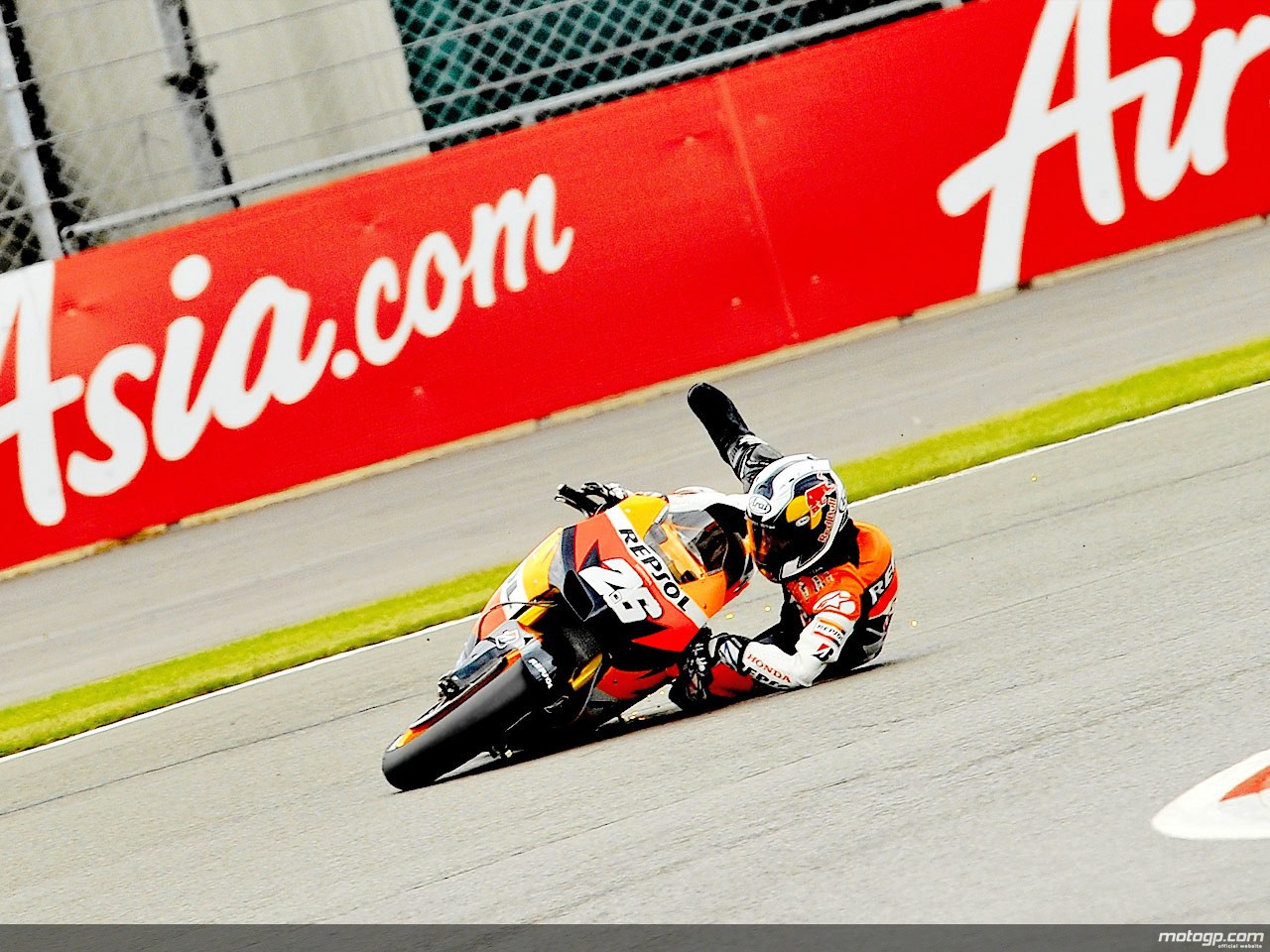
Rule #64// Cornering confidence increases with time and experience.
This pattern continues until it falls sharply and suddenly. 
Taken From http://www.velominati.com/the-rules/

If you ride a bicycle of a motorcycle you should be very familiar with this rule either in theory as written above or in action if you ever slipped in a turn. There are always the bending places and then there is the breaking point of everything. Handling proper situations and 'bending' them when necessarily should also come with the ability of the handler of knowing when something breaks. Knowing and avoiding the breaking point like hell is pretty important. After that last bending point it is you who should come and fill the gap between those bending points. Being lazy for any reason to feel this gap can lead to a total collapse of your whole structure. This is pretty important when organizing something like a conference.

What the organization of a conference is actually looks a lot like a structure made of things that must be there and it is like the foundations of the building, things that is equally important to be there like windows and doors and things that  is good to be there but the whole structure can be operational and without all those like the decoration of the building. The shitty thing here is that most of the people who only know a conference as visitors (and attract visitors is one of your the main goals) get all this backwards.

Having the perfect conditions and everything you need to organize a FOSS conference is beyond imagination so in order to do proper work and in the same time keep everyone of your visitors satisfied you have to 'bend' some things. Most of the time it is your patience and you time but many times is your volunteers and your budget. Did I ever mentioned so far that you have to be very creative? Well when organize a conference many times you will have lemons and you will be asked to make orange juice  No worries. If you and your team are highly creative, making orange juice out of lemons is just foreplay. It is not impossible and once you do it once or twice then you come to a point when you find it very easy. The time you will find something (in other conditions extreme and undo-able) easy be very careful. This is the point when there is a big change to 'fall sharply and suddenly'. There is nothing wrong with failing up to a point. After that point is when you will start having structure problems. If you pay attention you will only have some bruises, if not...